 +1-3236076188
 sales@marketmonitorglobal.com
 Log In
  Log In
 Global Lysozyme Market to Reach $93.02 Million by 2031, Growing at 3.45% CAGR
Wednesday,08 Jul,2026
Lysozyme: Definition and Principles
Lysozyme (also known as muramidase or N-acetylmuramide glycanohydrolase) is an alkaline enzyme that hydrolyzes mucopolysaccharides in bacterial cell walls. It specifically cleaves the β-1,4 glycosidic bond between N-acetylmuramic acid and N-acetylglucosamine — key structural components of bacterial peptidoglycan — thereby decomposing the insoluble mucopolysaccharide of the cell wall into soluble glycopeptides. This causes cell wall rupture and bacterial lysis (cell death). Lysozyme can also directly bind to negatively charged viral proteins and form complexes with DNA, RNA, and apoproteins to inactivate viruses. It is naturally found in various biological sources, including egg white, human tears, saliva, milk, and certain microorganisms.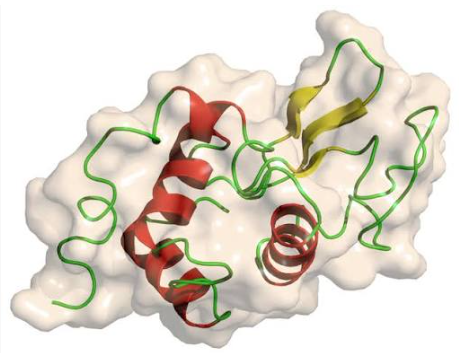
Key sources and types:
-
Egg white lysozyme (dominant type, 58.13% share): Extracted from hen egg white. This is the most traditional and widely used source, leveraging the high lysozyme content of egg white (approximately 0.3-0.4% by weight). Egg white lysozyme is highly purified and well-established for food, pharmaceutical, and feed applications.
-
Microbial lysozyme: Produced via fermentation using microorganisms such as Streptomyces or Aspergillus species. This route offers the potential for lower-cost production at scale, but fermentation process development is challenging and yields can be variable.
Key properties and benefits:
-
Natural and safe: Lysozyme is a naturally occurring enzyme, recognized as safe (GRAS) for food applications. It is biodegradable and does not leave harmful residues.
-
Antibacterial activity: Effective against Gram-positive bacteria (such as Bacillus, Staphylococcus, Streptococcus, and Lactobacillus species). It is less effective against Gram-negative bacteria (which have an outer membrane protecting the peptidoglycan layer), but can be combined with other agents (e.g., EDTA, organic acids) to enhance activity.
-
Antiviral activity: Inactivates viruses by binding to negatively charged viral proteins and forming complexes with nucleic acids.
-
Heat stability: Lysozyme is relatively heat-stable, retaining activity after pasteurization and some thermal processing.
-
Preservative properties: Extends the shelf life of food and beverage products by inhibiting bacterial growth.
Applications of lysozyme:
-
Feed (largest segment, 41.77% share): Used as a growth promoter and antibiotic alternative in animal feed (poultry, swine, aquaculture). Lysozyme helps control pathogenic bacteria in the gastrointestinal tract, improving gut health, feed conversion, and weight gain. It reduces the need for antibiotic growth promoters, aligning with the global trend of reducing antibiotic use in livestock.
-
Food and beverage: Used as a natural preservative in:
-
Wine and beer: Controls spoilage bacteria (Lactobacillus, Pediococcus).
-
Cheese: Prevents gas-forming bacteria (Clostridium tyrobutyricum) that cause late blowing in hard cheeses (e.g., cheese bloating).
-
Meat and seafood: Inhibits spoilage bacteria and extends shelf life.
-
Fruit juices and dairy: Controls spoilage and pathogenic bacteria.
-
-
Pharmaceuticals: Used in:
-
Oral care products: Toothpaste, mouthwash — lysozyme reduces plaque and gingivitis by inhibiting oral bacteria.
-
Drug formulations: As an anti-inflammatory and antibacterial agent in topical and ophthalmic preparations.
-
Functional foods: Products positioning for immune health or digestive health.
-
-
Other applications: Cosmetics (anti-acne, skin care), biotechnology (as a cell lysis agent for DNA extraction), and medical devices (antibacterial coatings).
Lysozyme Market Summary
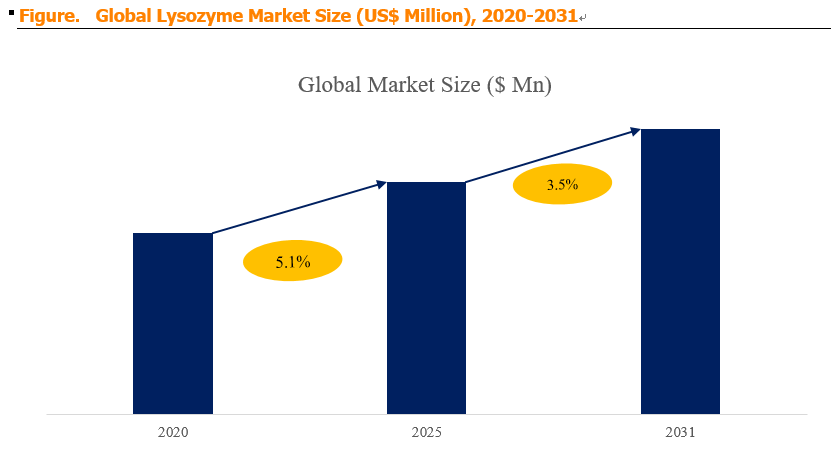
According to a new market research report published by Market Monitor Global, the global Lysozyme market was valued at USD 76.18 million in 2024 and is projected to grow to USD 93.02 million by 2031, at a compound annual growth rate (CAGR) of 3.45% during the forecast period. This steady growth is driven by increasing consumer demand for natural, safe, and clean-label ingredients; the growing use of lysozyme as a natural preservative in food and beverage; the expansion of animal feed applications (as an alternative to antibiotics); and the rising awareness of health and wellness.
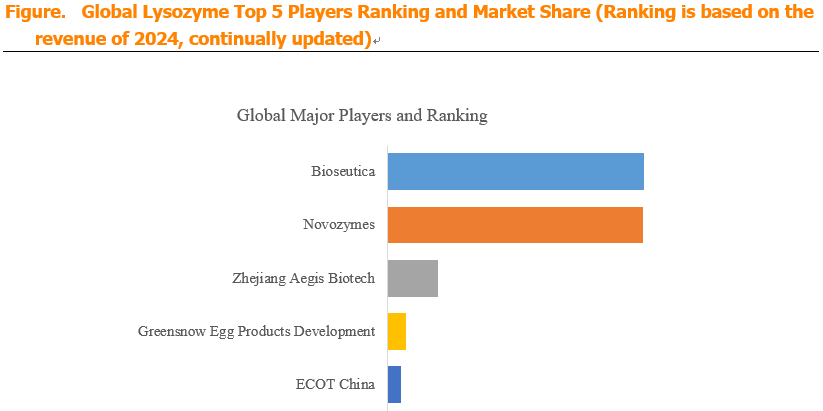
Market Monitor Global's analysis indicates that the global key manufacturers of Lysozyme include Bioseutica (Italy), Novozymes (Denmark), Zhejiang Aegis Biotech (China), Greensnow Egg Products Development (China), and ECOT China (China). In 2024, the global top three players collectively accounted for approximately 78.13% of total revenue, indicating a highly concentrated market with a few dominant players. Bioseutica and Novozymes lead in high-quality, food-grade and pharmaceutical-grade lysozyme, leveraging decades of enzyme technology expertise. Chinese companies (Zhejiang Aegis, Greensnow, ECOT) are major producers, benefiting from cost advantages in raw materials (egg white) and high-volume production, and are increasingly gaining market share in feed and food applications.
In terms of product type, Egg White Type is the largest segment, holding a 58.13% share. Egg white lysozyme dominates due to its established production processes, recognized quality, and proven performance across applications. Microbial Lysozyme accounts for a smaller share but is expected to grow as fermentation technology advances and production costs decrease, particularly for feed applications where cost is a critical factor.
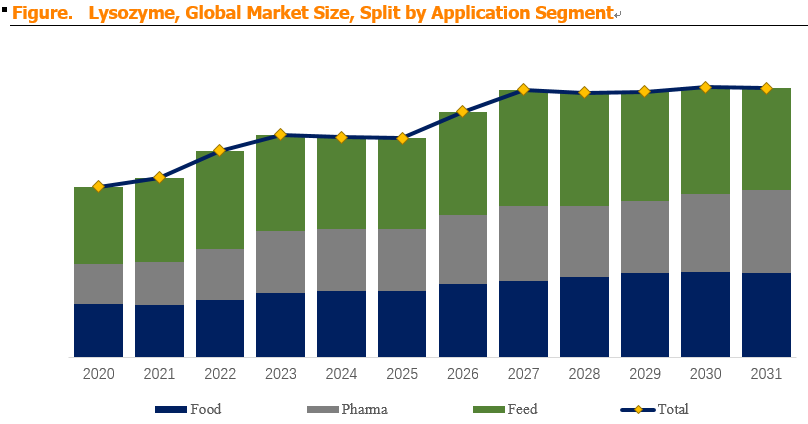
Regarding application, Feed is currently the largest segment, accounting for 41.77% of the market. The growing global demand for meat and animal protein, coupled with the trend toward reducing antibiotics in animal production, is driving lysozyme use as a natural growth promoter and gut health enhancer in livestock (poultry, swine, aquaculture). Food and Pharmaceutical are the second and third largest segments, reflecting the use of lysozyme as a natural preservative in wine, cheese, and other food products, and in oral care and anti-inflammatory pharmaceutical preparations.
Regional dynamics: Asia-Pacific is the largest and fastest-growing region, driven by China's dominant position in both production (low-cost egg white processing) and consumption (feed industry, food processing). China alone accounts for a substantial portion of global lysozyme production and consumption. North America and Europe are mature markets with high adoption in food and pharmaceutical applications, but slower growth than Asia-Pacific. Latin America and Middle East & Africa represent smaller but growing markets, driven by increasing meat production and food processing.
 Lysozyme Market Dynamics
Market Drivers:
-
D1: Increasing health awareness and demand for natural products – Consumers are increasingly inclined to choose natural ingredients rather than chemical synthetics. This provides a broad market base for lysozyme applications in:
-
Food: As a natural preservative replacing synthetic preservatives like benzoates, sorbates, and nitrates.
-
Pharmaceuticals: As a natural anti-inflammatory and antibacterial agent.
-
Feed: As a natural alternative to antibiotic growth promoters.
-
Cosmetics: As a natural antibacterial and skin-soothing ingredient.
-
-
D2: Growing demand for natural preservatives in food and beverage – The clean-label trend is driving reformulation of processed foods to remove artificial additives. Lysozyme's natural origin, GRAS status, and proven antimicrobial activity make it an attractive preservative for:
-
Wine: Controlling spoilage bacteria without affecting flavor.
-
Cheese: Preventing gas formation and late blowing.
-
Meat products: Extending shelf life and reducing spoilage.
-
Ready-to-drink beverages, sauces, and other packaged foods.
-
-
D3: Antibiotic reduction in animal feed – The global push to reduce antibiotics in livestock (due to concerns about antibiotic resistance) is driving demand for natural feed additives. Lysozyme, as a natural antibacterial enzyme, is an effective alternative:
-
Poultry: Improves gut health, feed conversion, and growth performance.
-
Swine: Reduces diarrhea in piglets and improves overall health.
-
Aquaculture: Controls bacterial diseases in fish and shrimp farming.
-
-
D4: Rising demand for functional foods and health products – The functional food and nutraceutical market is growing globally. Lysozyme is increasingly used in:
-
Oral health products: Toothpaste, chewing gum, and mouthwash with anti-plaque and antibacterial effects.
-
Immune health supplements: Positioning lysozyme as an immune-boosting ingredient.
-
Skin care products: Anti-acne and antibacterial formulations.
-
Sports nutrition: Products for gut health and immune support.
PM_UL.png)
-
Market Restraints:
-
R1: Raw material dependency and supply chain risks – Lysozyme production relies on specific raw materials:
-
Egg white (egg white lysozyme): Price and availability are sensitive to egg supply, which can be affected by:
-
Avian influenza outbreaks: Can significantly reduce egg production and increase prices.
-
Seasonal fluctuations: Egg production varies seasonally.
-
Feed costs: Corn and soybean meal prices affect egg production costs.
-
-
Microbial fermentation (microbial lysozyme): Yields are sensitive to fermentation conditions and metabolic byproduct inhibition.
Raw material price volatility or supply shortages can directly impact production costs and output.
-
-
R2: High process development costs (microbial lysozyme) – While microbial fermentation offers the potential for lower production costs, the process development costs are high:
-
Strain development: Identifying and optimizing high-yielding microbial strains.
-
Fermentation optimization: Optimizing media, temperature, pH, and aeration for consistent yields.
-
Downstream processing: Purification and concentration of lysozyme from fermentation broth.
-
Scale-up: Translating lab-scale and pilot-scale processes to commercial production.
In contrast, egg white lysozyme production is well-established and requires less process development.
-
-
R3: Competition and price pressure – The market is already concentrated (top three players ~78%), and competition is intensifying. Key drivers include:
-
New entrants: A Chinese company is expected to release a new 150-ton/year production line in the second half of 2025, increasing total production capacity.
-
Price competition: With increased supply, prices may decline, compressing margins for all players.
-
Competition from other natural antimicrobials: Nisin, bacteriocins, organic acids, and plant extracts may compete with lysozyme in some applications.
-
-
R4: Regulatory differences across regions – Regulatory approvals for lysozyme vary:
-
Food additives: Approved in many countries (e.g., as food additive E1105 in EU). In the US, it is considered GRAS, but specific applications may require notification.
-
Feed additives: Approval processes differ; some regions have stricter safety and efficacy requirements.
-
Pharmaceutical/OTC applications: Require clinical data and regulatory approval, which can be costly and time-consuming.
Navigating these regulatory complexities can be a barrier for smaller companies or new entrants.
-
Market Opportunities:
-
O1: Expansion in the feed industry (particularly aquaculture and swine) – The feed industry is the largest application (41.77% share) and offers significant growth opportunities:
-
Aquaculture: As aquaculture production expands (particularly shrimp, salmon, tilapia, catfish), demand for natural feed additives to control bacterial diseases is growing.
-
Swine: The growing trend toward antibiotic-free pork production is driving lysozyme adoption.
-
Poultry: Continued growth in broiler and layer production, with increasing use of natural additives for gut health.
-
Feed efficiency: In emerging markets, demand for feed additives to improve feed conversion and reduce production costs is strong.
-
-
O2: Development of microbial lysozyme for cost-competitive feed applications – While egg white lysozyme dominates the pharmaceutical and food segments (where quality and purity are critical), microbial lysozyme offers cost advantages for feed applications. Key development opportunities:
-
Strain improvement: Developing higher-yielding, more stable microbial strains.
-
Process optimization: Reducing fermentation costs and improving downstream recovery yields.
-
Price reduction: Targeting feed-grade lysozyme at a price point that makes it economically competitive with other feed additives.
-
-
O3: Development of synergistic combination products – Lysozyme can be formulated with other natural antimicrobials for enhanced efficacy:
-
Lysozyme + nisin: Synergistic activity against a broader spectrum of bacteria.
-
Lysozyme + organic acids (e.g., lactic acid, citric acid): Enhanced activity against Gram-negative bacteria.
-
Lysozyme + bacteriophages: Targeted antimicrobial solutions.
-
Lysozyme + plant extracts: Natural, clean-label combinations for food preservation.
These combination products can be patented and command premium pricing.
-
-
O4: Expansion into cosmetics and personal care – Lysozyme's antibacterial and anti-inflammatory properties are being explored for:
-
Anti-acne products: Inhibiting Cutibacterium acnes.
-
Oral care: Toothpaste, mouthwash, breath fresheners.
-
Skin care: Wound healing, anti-inflammatory, and soothing products.
-
Hair care: Scalp health products.
The cosmetics and personal care market is high-growth and less price-sensitive than feed, offering potential for premium-priced products.
-
-
O5: Development of new food applications – Lysozyme is being explored for new food preservation applications:
-
Ready-to-eat meat and poultry products: Inhibiting Listeria monocytogenes and other pathogens.
-
Plant-based foods: Preserving plant-based alternatives (burgers, nuggets, dairy alternatives).
-
Fresh-cut produce: Reducing spoilage and pathogen load.
-
Fermented foods: Controlling spoilage in kimchi, sauerkraut, and other fermented products.
As clean-label and natural preservation trends grow, new food applications will drive lysozyme demand.
-
Industry Trends:
-
Dominance of egg white lysozyme: Egg white type holds ~58% share, reflecting its established supply chain, recognized quality, and suitability for high-purity applications (food, pharma).
-
Growing feed application: Feed is the largest application segment, driven by antibiotic reduction and demand for natural growth promoters.
-
Increasing competition: Competition among manufacturers is intensifying, with new entrants and capacity expansions (e.g., 150-ton new line in China in 2025). This may lead to price pressure and margin compression.
-
Raw material dependency: The industry remains dependent on egg white supply, which creates vulnerability to avian influenza and other supply disruptions.
-
Microbial lysozyme development: Fermentation-based lysozyme development continues, but high process development costs and yield variability remain challenges.
-
Growth in China: China is a major producer and consumer of lysozyme, with companies expanding capacity and gaining global market share.
Industry Structure and Competitive Dynamics
The global Lysozyme market is characterized by:
-
Global leaders (Bioseutica, Novozymes): These companies have:
-
Strong brand reputation: Recognized for quality, purity, and reliability.
-
Extensive application expertise: Deep knowledge of lysozyme applications in food, pharma, and feed.
-
Regulatory expertise: Navigating global approvals and compliance.
-
Global distribution networks: Serving customers worldwide.
-
Premium positioning: Offering high-purity, high-quality products at premium prices.
-
-
Major Chinese producers (Zhejiang Aegis, Greensnow, ECOT, others): These companies have:
-
Cost advantages: Lower raw material (egg white) costs and labor costs.
-
Scale: High-volume production for domestic and export markets.
-
Growing quality: Improving product quality to compete in international markets.
-
Strong domestic demand: Driven by China's large feed and food industries.
-
Capacity expansion: New production lines (e.g., 150-ton/year line) increasing global supply.
-
-
Other players: Smaller or regional players serving specific markets (e.g., Japan, South Korea, Latin America, Middle East).
Key success factors in this market:
-
Cost competitiveness: Efficient raw material sourcing, high-yield production, and economies of scale.
-
Product quality and consistency: Meeting food, pharma, and feed quality standards.
-
Application expertise: Understanding customer needs in food preservation, feed nutrition, and pharmaceutical formulation.
-
Regulatory compliance: Navigating global food, feed, and pharma regulations.
-
Supply chain reliability: Securing raw material supply and managing risks (avian influenza, price volatility).
-
Innovation: Developing new applications, formulations, and synergistic combinations.


