 +1-3236076188
 sales@marketmonitorglobal.com
 Log In
  Log In
 Global Palmitoleic Acid Market to Reach $0.09 Billion by 2030, Growing at 7.9% CAGR
Monday,06 Jul,2026
Palmitoleic Acid: Definition and Principles
Palmitoleic acid (also known as palmitoleate, (9Z)-hexadecenoate, or C16:1 Acid) is a naturally occurring monounsaturated fatty acid (MUFA). It is widely found in animal and plant fats, especially in marine fish oil, dairy products, certain vegetable oils (e.g., macadamia nut oil, sea buckthorn oil, and avocado oil), and human sebum. It can also be produced in the human body through dehydrogenation of palmitic acid (C16:0) — catalyzed by the enzyme stearoyl-CoA desaturase-1 (SCD-1). Palmitoleic acid is a long-chain fatty acid with an aliphatic tail containing 16 carbon atoms and one double bond at the omega-7 position (hence the common name Omega-7 fatty acid). It is a very hydrophobic molecule, practically insoluble in water, and relatively neutral.
Key biological functions and health benefits:
-
Anti-inflammatory: Palmitoleic acid modulates inflammatory pathways, reducing the production of pro-inflammatory cytokines (TNF-α, IL-6, IL-1β) and promoting the resolution of inflammation. This makes it beneficial for chronic inflammatory conditions (metabolic syndrome, cardiovascular disease, skin disorders).
-
Improved metabolism: Studies suggest palmitoleic acid improves insulin sensitivity (by enhancing insulin signaling and reducing hepatic steatosis), supports lipid metabolism (reduces triglyceride accumulation in the liver), and may aid in weight management.
-
Skin health: Palmitoleic acid is a component of human sebum and contributes to the skin's barrier function. It provides moisture replenishment to mucosal membranes and skin, improves skin elasticity, reduces transepidermal water loss, and offers anti-aging benefits (reducing wrinkles, improving skin firmness, and promoting nail and hair health).
-
Cardiovascular health: It supports healthy cholesterol profiles (lowering LDL and triglycerides, maintaining or increasing HDL), reduces arterial inflammation, and may reduce the risk of atherosclerosis.
-
Mucosal health: Supports the integrity and moisture balance of mucosal membranes (gastrointestinal tract, urogenital tract, respiratory tract), which is particularly relevant for gastrointestinal health and urological applications.
XZL7VJ$2Q[`2`47.png)
Natural sources:
-
Marine sources: Fish oil (e.g., salmon, sardines, anchovies), algae oil, and marine microorganisms.
-
Plant sources: Macadamia nut oil (up to 20-30% palmitoleic acid), sea buckthorn oil (Hippophae rhamnoides — up to 30-40% palmitoleic acid), avocado oil, and certain berry oils.
-
Animal sources: Dairy products (milk fat), tallow, and human sebum.
Market grades and product types:
-
Botanical Source (largest segment, 79.6% share): Palmitoleic acid extracted from plant sources (sea buckthorn, macadamia, avocado, etc.). Plant-derived palmitoleic acid is growing in popularity due to consumer preferences for plant-based, vegan-friendly ingredients and cleaner supply chains (fewer sustainability concerns than marine sources).
-
Marine Source: Extracted from fish oil or marine algae. Marine sources are typically rich in omega-3 fatty acids (EPA, DHA) alongside palmitoleic acid, offering a broader nutritional profile.
-
Synthetic / Fermentation-derived: Emerging production routes through microbial fermentation or chemical synthesis, offering greater purity, scalability, and supply chain stability (reducing dependence on natural sources).
Palmitoleic Acid Market Summary
According to a new market research report published by Market Monitor Global, the global Palmitoleic Acid market is projected to reach USD 0.09 billion (approximately $90 million) by 2030, at a compound annual growth rate (CAGR) of 7.9% during the forecast period. This robust growth is driven by increasing consumer awareness of omega-7 fatty acids' health benefits, growing demand for natural and plant-based ingredients in dietary supplements and cosmetics, and expanding applications in functional foods, nutraceuticals, and personal care products.
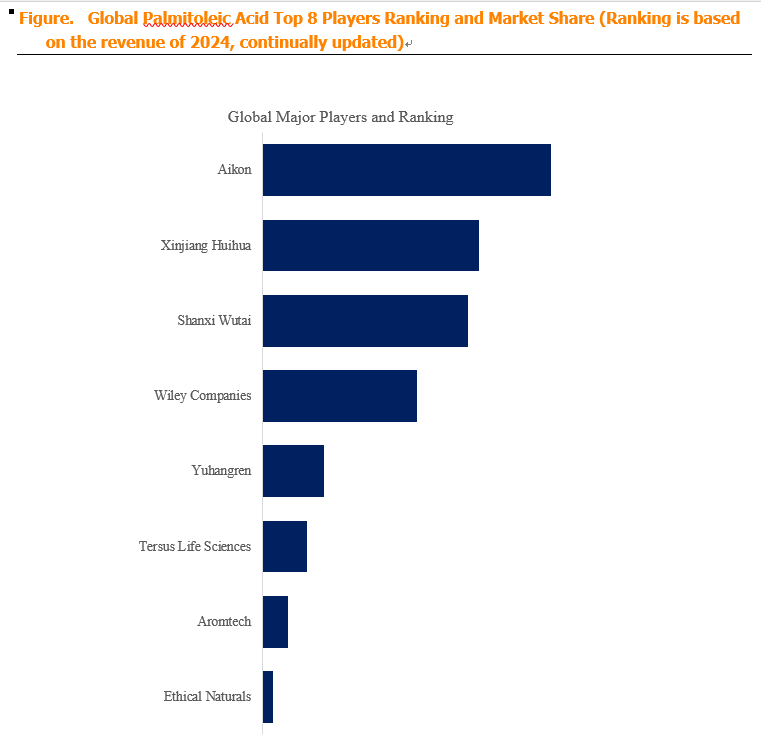
Market Monitor Global's analysis indicates that the global key manufacturers of Palmitoleic Acid include Aikon (China/global), Xinjiang Huihua (China), Shanxi Wutai (China), Wiley Companies (USA), and Yuhangren (China). In 2024, the global top four players collectively accounted for approximately 72.0% of total revenue, indicating a highly concentrated market with a few dominant players, primarily Chinese suppliers (benefiting from the country's strong sea buckthorn production and processing capabilities) alongside a US-based player (Wiley Companies). The market is characterized by high barriers to entry — including sourcing high-quality natural feedstocks, advanced extraction and purification technologies, and rigorous quality control for dietary supplement and cosmetic applications.
In terms of product type, Botanical Source is currently the largest segment, holding a 79.6% share. Plant-derived palmitoleic acid dominates due to growing consumer preference for plant-based, vegan-friendly, and sustainable ingredients, as well as the higher purity and more consistent quality achievable from controlled cultivation and extraction processes. Sea buckthorn oil is the primary botanical source, while macadamia nut oil and avocado oil also contribute. Marine Source accounts for a smaller share, primarily from fish oil and marine algae, but is expected to grow as sustainable marine sourcing technologies improve.
Regarding application, Dietary Supplements is the largest segment, accounting for 55.3% of the market. Palmitoleic acid is marketed as an omega-7 fatty acid supplement, often combined with other omega fatty acids (omega-3, omega-6, omega-9) or formulated as a standalone product. Key health positioning: heart health, anti-inflammation, metabolic support, and skin health. Cosmetics and Personal Care is the second-largest segment, driven by demand for natural, anti-aging, and skin-rejuvenating ingredients in skincare products (moisturizers, serums, creams, anti-aging formulations, lip care, and hair care). Functional Foods and Beverages (fortified foods, nutritional beverages, functional oils) and Pharmaceuticals (as an active ingredient or excipient) account for the remainder.
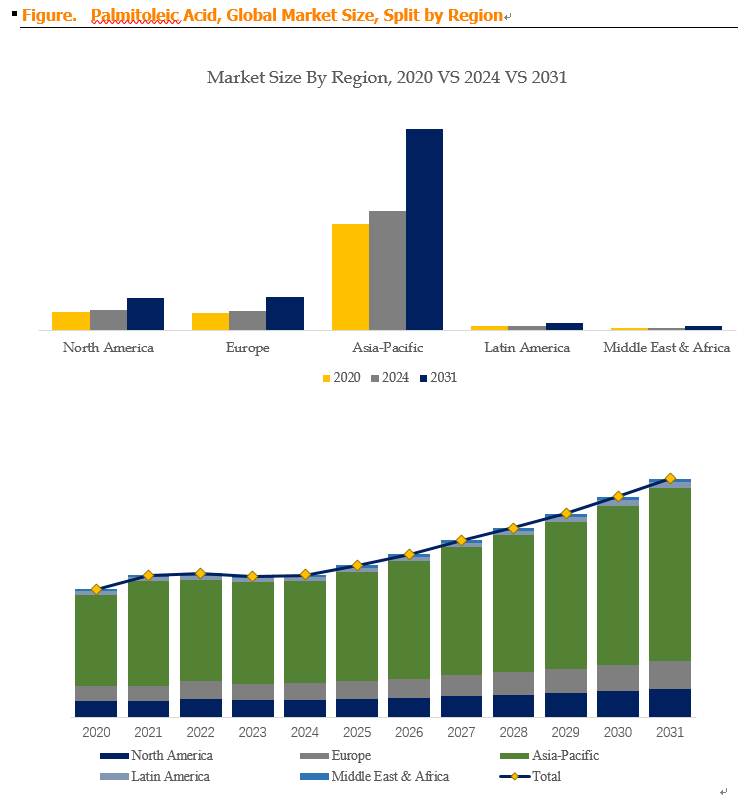
Regional dynamics: Asia-Pacific is the largest and fastest-growing market, driven by China's dominance in sea buckthorn cultivation and processing, growing domestic and international demand for natural ingredients, and increasing health awareness in China, Japan, South Korea, and India. North America is the second-largest market, driven by strong demand for dietary supplements, functional foods, and natural cosmetics; a mature health supplement industry; and high consumer awareness of omega-7 benefits. Europe is a significant market with strong demand from the cosmetics and personal care industry (particularly in France, Germany, and Switzerland), functional foods, and dietary supplements.
IMD4X9CP}4.png)
Palmitoleic Acid Market Dynamics
Market Drivers:
-
D1: Growing consumer awareness of omega-7 fatty acids' health benefits – Scientific research has highlighted palmitoleic acid's potential benefits: improving metabolic health (insulin sensitivity, lipid profile), reducing inflammation, supporting cardiovascular health, and promoting skin and mucosal health. As consumers become more educated about the health benefits of omega fatty acids (beyond EPA/DHA), demand for palmitoleic acid-containing supplements, functional foods, and cosmetic products has increased.
-
D2: Rising demand for plant-based, natural, and sustainable ingredients – Consumers are increasingly seeking natural, plant-derived, and sustainably sourced ingredients. Botanical-source palmitoleic acid (from sea buckthorn, macadamia, and avocado) aligns perfectly with these preferences, offering a clean-label, vegan, and often organic option. This contrasts with marine-source palmitoleic acid (from fish oil), which raises concerns about overfishing, marine pollution, and fishy odor/taste in final products.
-
D3: Growing demand for anti-aging and skin health products in cosmetics – The global cosmetics and personal care market (worth over $500 billion) is experiencing strong demand for natural, anti-aging, and skin-rejuvenating ingredients. Palmitoleic acid, which is a component of human sebum and supports skin barrier function and moisture balance, is increasingly used in high-end skincare formulations. Key product types: face creams, serums, anti-aging treatments, moisturizers, lip care, hair care, and sun care products.
-
D4: Expansion of functional foods and nutraceuticals markets – The global nutraceuticals market (functional foods, beverages, and dietary supplements) continues to grow. Palmitoleic acid is being incorporated into:
-
Functional oils and oil blends (for salad dressings, cooking oils, and dietary supplements).
-
Fortified beverages (smoothies, health drinks, dairy alternatives).
-
Nutrition bars, snacks, and confectionery (positioned as health-promoting, functional products).
-
Specialty infant and maternal nutrition (where fatty acid composition is critical).
This application expansion drives demand for palmitoleic acid in higher-value formulations.
-
-
D5: Increasing research and clinical validation — Ongoing clinical research is exploring palmitoleic acid's potential in:
-
Metabolic syndrome and type 2 diabetes: Improving insulin sensitivity, reducing hepatic steatosis, and lowering blood glucose.
-
Cardiovascular disease: Reducing LDL, triglycerides, and inflammation.
-
Inflammatory disorders: Reducing chronic inflammation (rheumatoid arthritis, inflammatory bowel disease).
-
Neurological health: Potential neuroprotective effects (though research is early-stage).
Positive clinical results will further drive demand for palmitoleic acid supplements and functional foods.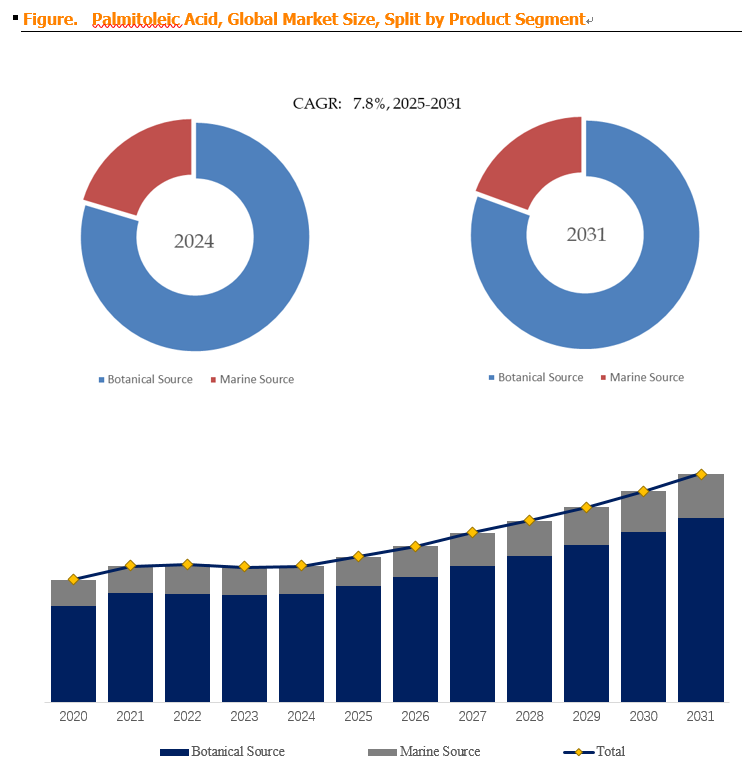
-
Market Restraints:
-
R1: High cost of production and purification — Palmitoleic acid is a minor fatty acid in most natural sources (e.g., sea buckthorn oil contains 30-40% palmitoleic acid; fish oil contains less than 5%). Extracting and purifying palmitoleic acid to high purity (e.g., >60-70%, or ≥90% for pharmaceutical-grade) requires expensive processes: solvent extraction, molecular distillation, supercritical CO₂ extraction, chromatography, and winterization. The high cost of production translates to high product prices, limiting market penetration to premium-priced applications and price-sensitive consumers.
-
R2: Supply chain constraints for botanical sources — Sea buckthorn (the primary botanical source for palmitoleic acid) is geographically concentrated (China accounts for over 80% of global sea buckthorn cultivation). This concentration creates supply chain risk:
-
Weather variability: Sea buckthorn yields can be affected by droughts, frosts, and other adverse weather conditions.
-
Geopolitical risks: Trade tensions or export restrictions could disrupt supply.
-
Biodiversity concerns: Sea buckthorn monocultures and over-harvesting could impact biodiversity and sustainability.
-
Quality variability: The fatty acid profile of sea buckthorn oil varies by species, growing region, and harvest time, affecting palmitoleic acid content and consistency.
-
-
R3: Competition from alternative omega fatty acids (omega-3, omega-6, omega-9) — The omega fatty acids market is crowded with established, well-known ingredients:
-
Omega-3 (EPA, DHA): Strongly associated with heart health, brain health, and anti-inflammation; has a larger body of clinical research and consumer awareness.
-
Omega-6 (linoleic acid, GLA): Associated with skin health and inflammation; widely used in cosmetics and supplements.
-
Omega-9 (oleic acid): Abundant in olive oil and associated with heart health; widely recognized and consumed.
Palmitoleic acid (omega-7) is less well-known and less researched than omega-3 and omega-6, so it must compete for consumer awareness, supplement shelf space, and formulation slots against these established ingredients.
-
Market Opportunities:
-
O1: Development of alternative sources (fermentation, algae, and synthetic) — Microbial fermentation and algae cultivation offer opportunities to produce palmitoleic acid with:
-
Higher purity and consistency (less batch-to-batch variation).
-
Scalability (production independent of seasonal harvests).
-
Lower environmental footprint (less land, water, and pesticide use compared to plant cultivation).
-
Faster production cycles (days/weeks vs. months/years for plant cultivation).
-
Potentially lower cost (when scaled).
Companies developing commercial fermentation or algae-based palmitoleic acid production will have a significant competitive advantage in terms of supply chain stability, cost, and sustainability.
-
-
O2: Diversification of botanical sources beyond sea buckthorn — While sea buckthorn dominates the botanical source segment, other plant sources offer palmitoleic acid:
-
Macadamia nut oil: Contains 15-25% palmitoleic acid.
-
Avocado oil: Contains 2-8% palmitoleic acid (depending on variety and processing).
-
Certain berry oils: Cranberry, lingonberry, and other berry oils contain small amounts.
Developing extraction and purification technologies for these alternative sources can diversify supply and reduce dependence on sea buckthorn.
-
-
O3: Expansion into pharmaceutical and clinical nutrition — With ongoing research on palmitoleic acid's health benefits, there is potential for:
-
Pharmaceutical-grade palmitoleic acid as an active ingredient in prescription or over-the-counter products for metabolic syndrome, inflammation, or cardiovascular disease.
-
Clinical nutrition (enteral and parenteral nutrition products) for patients with malnutrition, metabolic disorders, or inflammatory conditions.
-
Veterinary applications: Animal health products for companion animals and livestock.
These applications require higher purity, regulatory approval, and clinical validation, but command higher prices.
-
-
O4: Clean-label and organic formulations — The clean-label trend favors natural, minimally processed, and recognizable ingredients. Palmitoleic acid, as a naturally occurring fatty acid, fits this profile. Organic-certified palmitoleic acid (from organic sea buckthorn or macadamia) commands premium pricing in the natural food, dietary supplement, and natural cosmetics markets.
-
O5: Combination products (synergistic formulations) — Palmitoleic acid can be formulated in combination with other ingredients for synergistic effects:
-
Palmitoleic acid + omega-3 (EPA/DHA): For comprehensive metabolic and cardiovascular health.
-
Palmitoleic acid + collagen: For skin health and anti-aging (combining collagen's structural support with palmitoleic acid's skin barrier function).
-
Palmitoleic acid + glucosamine or chondroitin: For joint health (combining anti-inflammatory effects with joint support).
-
Palmitoleic acid + vitamin E or antioxidants: To protect the oil from oxidation and enhance skin health.
Combination products can command higher prices and differentiate from standalone offerings.
-
Industry Trends:
-
Dominance of botanical sources: Botanical-source palmitoleic acid (particularly sea buckthorn) is the largest and fastest-growing segment, driven by consumer preferences for plant-based, vegan-friendly, and sustainable ingredients.
-
Dietary supplements as dominant application: Palmitoleic acid is primarily used in dietary supplements (capsules, softgels, powders) for heart health, metabolic support, and anti-inflammation.
-
Cosmetics and personal care as high-growth segment: Driven by demand for natural, anti-aging, and skin-rejuvenating ingredients in high-end skincare formulations.
-
Increasing research and clinical validation: Ongoing research is exploring palmitoleic acid's potential in metabolic syndrome, diabetes, inflammation, and skin health.
-
Supply chain diversification: Companies are seeking to diversify beyond sea buckthorn (China) by exploring other botanical sources (macadamia, avocado), marine sources (algae), and synthetic alternatives.
-
Sustainability and clean-label: Growing emphasis on sustainable sourcing, organic certification, and clean-label formulations.


