 +1-3236076188
 sales@marketmonitorglobal.com
 Log In
  Log In
 Home>News>Global Six-dimensional Torque Sensors Market to Reach $1.86 Billion by 2032, Growing at 25.9% CAGR
Global Six-dimensional Torque Sensors Market to Reach $1.86 Billion by 2032, Growing at 25.9% CAGR
Tuesday,23 Jun,2026
Six-dimensional Torque Sensors: Definition and Principles
Six-dimensional Torque Sensors (often referred to as six-axis force/torque sensors, F/T sensors, or multi-axis torque/force sensors) are precision measurement devices capable of simultaneously detecting force components in three orthogonal directions (Fx, Fy, Fz — linear forces along the X, Y, and Z axes) and torque components in three orthogonal directions (Mx, My, Mz — moments or torques around the X, Y, and Z axes) in three-dimensional space. This capability enables complete perception of force and torque information in all six degrees of freedom, making these sensors essential for applications that require precise force control, tactile feedback, and interaction with complex environments.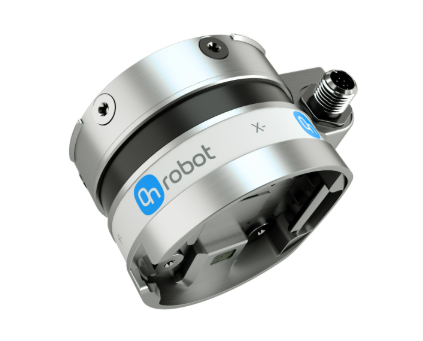
Key performance characteristics:
-
High precision: Typical force resolution in the range of 0.01–1.0 N, torque resolution in the range of 0.001–0.1 N·m, depending on the sensor's full-scale range and sensing technology.
-
Low coupling: Minimized crosstalk between channels (e.g., a force in Fx should not produce a significant reading in Fy or Mz). High-quality sensors achieve coupling errors below 1-5% of full scale.
-
High dynamic response: Fast sampling rates (kHz range) to capture rapid force changes during dynamic tasks such as assembly, grasping, or walking impact.
-
Overload protection: Ability to withstand occasional overloads without permanent damage or calibration shift (typically 1.5–3× full-scale rating).
-
High signal-to-noise ratio: Clean output signals with minimal electrical noise, enabling precise measurements in electrically noisy industrial environments.
-
Temperature stability: Maintained performance across the operating temperature range (-10°C to 60°C typical; wider ranges for specialized applications).
Working principle (Strain Gauge Type — the dominant technology, 75.5% market share):
The most common sensing technology for six-dimensional torque sensors is based on strain gauges bonded to a precisely machined elastomer structure (often a cross-shaped or spoke-shaped flexure). When external forces or torques are applied to the sensor, the elastomer deforms slightly (micro-strain). The strain gauges (arranged in Wheatstone bridge configurations) convert these deformations into minute resistance changes. By carefully designing the geometry of the elastomer and positioning multiple strain gauge bridges, the sensor can differentiate between the six independent force/torque components. Output signals are typically amplified, filtered, and digitized before being communicated to the host system (robot controller, PLC, or PC) via analog (voltage/current) or digital interfaces (EtherCAT, EtherNet/IP, PROFINET, CANopen, USB, RS-485, etc.).
Other sensing technologies (smaller market shares):
-
Capacitive: Measures changes in capacitance between electrodes as force is applied. Offers high sensitivity and low temperature drift but may have lower overload tolerance.
-
Piezoelectric: Uses piezoelectric crystals to generate charge proportional to applied force. Excellent dynamic response (high bandwidth) but poor for static measurements (charge leaks over time). Commonly used in high-frequency impact and vibration measurement.
-
Optical: Uses fiber Bragg gratings (FBG) or other optical techniques to measure strain. Offers immunity to electromagnetic interference (EMI) and long-distance signal transmission. Still emerging for force/torque sensing, higher cost, and less mature.
Applications of six-dimensional torque sensors:
-
Industrial robots and cobots: Force-controlled assembly (insertion, snap-fit), deburring, polishing, grinding, sanding, and finishing operations. Collaborative robots (cobots) use force sensing to implement safety features (force limiting, collision detection) and teach programming (hand-guided programming, "lead-through" teaching).
-
Humanoid robots: The explosive growth driver of the market. Six-axis sensors are mounted on:
-
Wrists — for grasping force feedback, object manipulation, and human-robot interaction (HRI) force control.
-
Ankles — for walking gait impact sensing, ground reaction force measurement, and balance control.
-
Joints and end-effectors — for whole-body force control and environmental interaction.
-
Hand actuators — for fine manipulation, haptic feedback, and tooling control.
These sensors enable humanoid robots to achieve human-like movement, fine manipulation, environmental adaptation, and safe interaction with humans and objects.
-
-
Medical and surgical robots: Force feedback for surgical instruments (providing haptic feedback to surgeons), robot-assisted minimally invasive surgery, and rehabilitation robots (force-controlled therapy, gait analysis).
-
Aerospace testing: Wind tunnel force balance measurements, structural testing, and engine thrust measurement.
-
Automotive testing: Vehicle dynamics testing, tire force measurement, crash testing, and component durability testing.
-
Precision assembly: Electronics assembly, micro-assembly, and handling of delicate components (sensors, optics, MEMS devices) where force control prevents damage.
-
Research and development: Biomechanics research, gait analysis, sports science, material testing, and robotics research.
Six-dimensional Torque Sensors Market Summary
According to a new market research report published by Market Monitor Global, the global Six-dimensional Torque Sensors market is projected to reach USD 1.86 billion by 2032, at a compound annual growth rate (CAGR) of 25.9% during the forecast period. This explosive growth is driven primarily by the rapid development and commercialization of humanoid robots (a market projected to reach tens of billions of dollars by 2030), combined with increasing adoption of force-controlled automation in industrial robotics, medical robotics, and testing applications.
Market Monitor Global's analysis indicates that the global key manufacturers of Six-dimensional Torque Sensors include ATI Industrial Automation (USA), Schunk (Germany), Advanced Mechanical Technology (USA), Sunrise Instruments (SRI) (Switzerland), Epson (Japan), Link-touch (Beijing) Technology (China), Changzhou Kunwei Sensing Technology (China), Kistler (Switzerland), Robotiq (Canada), and Shenzhen Xinjingcheng Sensing Technology (China). In 2025, the global top five players collectively accounted for approximately 61.0% of total revenue, indicating a moderately concentrated market with established players (ATI, Schunk, Kistler) dominating industrial robotics and specialized applications, while emerging players (particularly Chinese manufacturers) are rapidly gaining share in the humanoid robot segment.
In terms of product type, the Strain Gauge Type segment is currently the largest, holding a 75.5% share. Strain gauge-based sensors dominate because of their proven reliability, good accuracy, low coupling, moderate cost, and broad application range (static and dynamic measurements). They are suitable for most industrial, robotics, and testing applications. Capacitive Type and Piezoelectric Type account for most of the remainder, with piezoelectric sensors used primarily in dynamic measurement and impact applications, and capacitive sensors in emerging applications where EMI immunity or extreme sensitivity is required.
Regarding application, Industrial Robots is currently the largest segment, accounting for 48.2% of the market. However, the Humanoid Robots segment is the fastest-growing and is expected to become the largest by 2028-2029, driven by the commercial introduction of humanoid robots from Tesla (Optimus), Figure, 1X, Xiaomi (CyberOne), Boston Dynamics (Atlas — now transitioning to electric), and numerous startups.
Regional dynamics: North America (particularly the US) is a major market, driven by the presence of leading humanoid robot developers (Tesla, Figure, Boston Dynamics, Agility Robotics, Apptronik), strong industrial automation (automotive, aerospace, defense), and extensive R&D activities. Europe is also significant, with strong industrial robotics (Germany, Switzerland, Italy), automotive manufacturing, and aerospace testing. Asia-Pacific is the fastest-growing region, driven by China's aggressive push into humanoid robotics (multiple government-supported projects and startups), Japan's robotics industry (Epson, other industrial robot manufacturers), and South Korea's automation sector. China is rapidly expanding both production capacity and application development for six-axis sensors, targeting local humanoid robot developers and industrial automation needs.
Six-dimensional Torque Sensors Market Dynamics
Market Drivers:
-
D1: Explosive growth of the humanoid robot industry – Humanoid robots are transitioning from academic research and niche demonstrations to commercial products. Key players:
-
Tesla: Optimus (Tesla Bot) — aims for mass production of humanoid robots for factory and consumer applications.
-
Figure: Figure 01 (humanoid robot), with commercial partnerships (BMW, others) and significant funding.
-
1X Technologies: Neo (humanoid for home and industrial use).
-
Boston Dynamics: Atlas (humanoid robot, now electric, focusing on commercial viability).
-
Xiaomi: CyberOne (humanoid prototype, with plans for future products).
-
Numerous startups: Agility Robotics, Apptronik, Sanctuary AI, UBTech, Fourier Intelligence, and many others.
Each humanoid robot requires 6-10+ six-dimensional torque sensors (wrists, ankles, possibly joints and hands). A mass-market humanoid robot (millions of units per year) would require tens of millions of sensors annually — a transformative market opportunity.
-
-
D2: Increasing demand for force-controlled industrial automation – Traditional industrial robots operate in "position control" mode (move to programmed positions). However, increasing complexity of tasks (assembly of delicate components, finishing operations, handling of compliant materials, human-robot collaboration) requires force control — using force feedback to adjust motion in real-time. Six-axis sensors enable:
-
Precision assembly: Insertion of bearings, gears, connectors, and electronic components.
-
Deburring, polishing, grinding, and sanding: Maintaining constant contact force for consistent surface finish.
-
Handling fragile or deformable objects: Adjusting grip force to avoid damaging soft materials, delicate electronics, or food products.
-
Cobot safety: Force sensing enables collision detection, force limiting, and safe interaction with humans.
As industrial robots increasingly integrate force sensing (either as standard or optional), demand for six-axis sensors grows.
-
-
D3: Advancements in medical and surgical robotics – Surgical robots (da Vinci, Intuitive Surgical; Mako, Stryker; and numerous next-generation systems) and rehabilitation robots (gait training, upper-limb rehabilitation, prosthetics) require force feedback for safe, effective therapy and surgery. Key applications:
-
Haptic feedback for surgeons: Sensing forces at the instrument tip and providing tactile/haptic feedback to the surgeon's console — improves surgical precision, reduces tissue damage, and shortens learning curves.
-
Force-controlled therapy: Rehabilitation robots (e.g., Lokomat, Hocoma) use force sensing to adapt resistance, support, and assistance to patient-specific needs.
-
Prosthetics and orthotics: Force sensors in prosthetic hands and feet for natural gait and grasp control.
The medical robotics market is growing at 10-15% annually, and six-axis sensors are a critical enabling technology.
-
-
D4: Growth of aerospace and automotive testing – Both industries require precise force/torque measurement for testing, validation, and quality control:
-
Aerospace: Wind tunnel testing (airfoil force measurement), structural fatigue testing, flight control systems testing, and engine thrust measurement.
-
Automotive: Vehicle dynamics (tire forces, suspension loads), component durability (fatigue testing), crash testing (dummy forces), and electric vehicle battery pack testing.
As aerospace and automotive R&D spending increases (driven by electrification, autonomous vehicles, and new aircraft programs), demand for high-performance six-axis sensors remains steady.
-
-
D5: Decreasing sensor costs and improving performance – Historically, six-dimensional torque sensors were expensive (several thousand to tens of thousands of dollars per sensor), limiting adoption to high-value applications. Key cost-reduction drivers:
-
Improved manufacturing processes: MEMS (micro-electromechanical systems) fabrication, automated assembly, and calibration.
-
Lower-cost electronics: Integrated signal conditioning, ADC, and digital communication reduce component costs.
-
Economies of scale: As humanoid robot production ramps, sensor manufacturers can invest in high-volume production lines, reducing unit costs.
-
Alternative materials: Using steel instead of exotic alloys, or polymer-based sensing elements, reduces material costs.
As sensor costs fall (e.g., from $5,000 to $500–1,000), they become economically viable for broader applications, including consumer-facing humanoid robots and service robots.
-
-
D6: Government and policy support for robotics – Governments worldwide are funding and promoting robotics and AI to maintain industrial competitiveness and address societal challenges (aging populations, labor shortages). Key initiatives:
-
China: Multiple provincial and national-level funding and policy support for humanoid robots and industrial robotics; state-backed research programs.
-
European Union: Horizon Europe robotics funding; European Robotics Association initiatives.
-
US: National Robotics Initiative (NRI); Department of Defense and NASA funding for robotics; NSF support for robotics research.
-
Japan and South Korea: Long-standing government support for robotics (METI in Japan, MSIP in Korea).
These policies directly or indirectly drive demand for advanced sensing technologies, including six-axis torque sensors.
-
Market Restraints:
-
R1: High cost relative to traditional sensing alternatives – Despite cost reductions, six-dimensional torque sensors remain significantly more expensive than traditional sensing alternatives for specific applications:
-
Single-axis force sensors (load cells): Cost 1/10 to 1/5 of six-axis sensors.
-
Joint torque sensors (in robot joints): Often integrated into robot actuator, not a separate sensor component.
-
Vision-based force estimation (using cameras and AI to estimate force from visual deformation or motion): Could potentially replace physical sensors in some applications.
For cost-sensitive applications (e.g., low-cost industrial cobots, consumer electronics assembly), the high cost of six-axis sensors may limit adoption, favoring single-axis or alternative sensing solutions.
-
-
R2: Technical complexity — decoupling, cross-talk, and calibration – Achieving accurate six-axis measurement is non-trivial:
-
Decoupling: Separating force and torque components from each other (minimizing crosstalk) requires careful mechanical design, precise strain gauge placement, and sophisticated signal processing algorithms.
-
Cross-talk: Forces in one axis can create signals in other axes (e.g., Fx coupling into Fy or Mz), reducing measurement accuracy.
-
Calibration: Six-axis sensors require complex multi-point, multi-axis calibration procedures to derive the calibration matrix (relationship between strain gauge outputs and applied force/torque). Calibration is time-consuming, expensive, and must be repeated after overload or temperature changes.
-
Temperature sensitivity: Strain gauges and materials have temperature-dependent properties; temperature compensation algorithms must be robust across the operating range.
These technical challenges mean that not all sensor manufacturers can produce high-quality six-axis sensors; many struggle with coupling errors, drift, or poor repeatability. The high technical barrier limits supply, maintaining high prices and constraining market growth.
-
-
R3: Reliability and durability concerns in harsh environments – Six-axis sensors are exposed to harsh operating conditions in many applications:
-
Industrial robots: Vibration, shocks, temperature extremes, dust, moisture, and electromagnetic interference (EMI).
-
Humanoid robots: Walking impacts (high peak forces), foot strikes, and continuous dynamic loading.
-
Medical robots: Sterilization requirements (autoclaving, chemical disinfection) — sensors must withstand repeated cleaning.
-
Aerospace: High vibration, thermal cycling, radiation (for space applications).
In these environments, sensors can suffer from: strain gauge fatigue (drift in sensitivity and offset), bond failure (strain gauge-to-structure), connector failure, and electronics failures. Premature sensor failure leads to unplanned downtime, safety risks, and replacement costs, deterring adoption in critical applications.
-
-
R4: Integration challenges with robot control systems – Six-axis sensors must be integrated seamlessly with robot control systems:
-
Interface compatibility: Sensors must support common industrial protocols (EtherCAT, Ethernet/IP, PROFINET, CANopen) and provide data at the required update rates.
-
Software integration: Control algorithms (force control, impedance control, admittance control) must be implemented or adapted to use the sensor data. Many robotics engineers lack expertise in force control — it's more complex than position control.
-
Mounting and mechanical integration: Sensors must be physically integrated into robot wrists, ankles, or other components without interfering with range of motion, payload capacity, or dynamic performance.
The integration burden falls on robot manufacturers and system integrators, who may need additional engineering effort and time to implement force-sensing capabilities. For some, this may be a barrier to adoption.
-
Market Opportunities:
-
O1: Standardization and modularization – Currently, the market is fragmented with many proprietary designs, custom interfaces, and application-specific calibrations. Standardization opportunities include:
-
Standardized mechanical interfaces (mounting patterns, flange sizes) to reduce integration cost and enable sensor interchangeability.
-
Standardized communication protocols (EtherCAT, EtherNet/IP, PROFINET) and data formats to simplify integration with different robot controllers.
-
Standardized calibration and validation procedures (ISO, IEEE, or industry-specific standards) to improve trust and comparability.
-
Modular sensor architectures (common electronics platform, interchangeable sensing elements, configurable ranges) to reduce manufacturing costs and enable customization.
Manufacturers that contribute to or adopt emerging standards can capture broader market share by reducing integration friction.
-
-
O2: Miniaturization and integration into robot joints and actuators – Currently, six-axis sensors are typically mounted externally to robot wrists or ankles, adding bulk, weight, and cost. Opportunities for miniaturization and integration include:
-
Embedded sensing within robot joints: Integrating six-axis sensing elements into standard robot joints, eliminating the need for separate sensors and reducing overall robot cost and complexity.
-
MEMS-based six-axis sensors: Developing MEMS (micro-electromechanical systems) force/torque sensors that can be batch-fabricated at low cost, enabling integration into robot end-effectors, grippers, and even within robot links.
-
Sensor fusion with existing joint encoders: Combining joint position/torque measurements with external force sensor data to estimate six-axis forces without a separate sensor.
-
Silicone- or polymer-based strain sensors: Lower-cost sensing elements (e.g., conductive polymers, capacitive structures) that can be mass-produced, reducing sensor cost dramatically.
Miniaturization and integration reduce system cost, simplify integration, and enable force sensing in applications where external sensors are infeasible (e.g., within small robot arms, embedded in prosthetics, or integrated into humanoid robot feet). This is a key opportunity for new entrants with MEMS or material science capabilities.
-
-
O3: Development of cost-effective sensors for humanoid robot volume production – The humanoid robot market, when it reaches mass production, will require millions of sensors annually at significantly lower unit costs than current industrial-grade sensors. This is an opportunity for sensor manufacturers to:
-
Invest in high-volume production lines (automated assembly, automated calibration, large-batch testing).
-
Simplify design (e.g., using fewer strain gauges, lower-cost materials, simplified signal conditioning) while maintaining acceptable performance for humanoid applications.
-
Develop humanoid-optimized sensor packages (e.g., specific ranges, form factors, and interfaces optimized for wrist/ankle mounting).
-
Partner with humanoid robot OEMs (Tesla, Figure, 1X, etc.) to co-develop sensors that meet their specific requirements.
This market, if it materializes, could transform the six-axis sensor industry, shifting from high-margin, low-volume industrial sensors to lower-margin, ultra-high-volume sensors. Manufacturers that position themselves early will gain significant competitive advantage.
-
-
O4: Expansion into emerging robotics and automation applications – Beyond the core applications (industrial robots, humanoid, medical), there are numerous emerging opportunities:
-
Service robots: Delivery robots, cleaning robots, hospitality robots, personal assistance robots (e.g., for elderly care).
-
Agriculture robots: Harvesting, weeding, pruning — force sensing for delicate crop handling.
-
Underwater and marine robotics: Manipulation in challenging underwater environments.
-
Space robotics: Force sensing for satellite servicing, in-orbit assembly, and planetary exploration (including extreme environments, radiation tolerance).
-
Exoskeletons: Force sensing for control of lower-limb and upper-limb exoskeletons for industrial or rehabilitation applications.
-
Virtual reality (VR) and haptics: Force-feedback controllers and haptic interfaces (consumer-grade force feedback devices).
These emerging markets, while smaller than industrial robots today, are growing rapidly and provide opportunities for sensor manufacturers with application-specific product development.
-
-
O5: Software and analytics — turning sensor data into actionable insights – The hardware is central, but software and data analytics represent significant value-add opportunities:
-
Force control libraries: Pre-built, optimized force control algorithms (admittance control, impedance control, force/position hybrid control) that can be easily integrated into robot applications.
-
Collision detection and safety monitoring: Algorithms that use force sensor data to detect collisions, monitor safety thresholds, and trigger emergency stops.
-
Process monitoring: Using force/torque data to monitor manufacturing quality (e.g., detecting variations in insertion force during assembly, indicating part defects).
-
Human-robot interaction (HRI) analytics: Using force data to classify human interaction intent, enabling smoother, more intuitive human-robot collaboration.
-
Digital twin integration: Feeding force sensor data into digital twin models to enable virtual commissioning, performance prediction, and maintenance optimization.
Manufacturers that offer comprehensive software suites (including SDKs, APIs, and application examples) alongside hardware can create stickier customer relationships and capture recurring software revenue.
-
-
O6: Aftermarket and retrofitting services – The installed base of industrial robots (millions of units globally) represents a significant retrofitting opportunity:
-
Many existing robots lack force sensing capabilities. Retrofitting with six-axis sensors can upgrade them to handle force-controlled applications.
-
As humanoid robots become commercially available, there will be demand for replacing or upgrading sensors as robot designs evolve.
-
Testing, repair, re-calibration, and replacement services for existing sensors provide recurring revenue for sensor manufacturers.
-
Customized sensor solutions for specific robot models or OEM requirements can command higher margins.
Manufacturers with strong service networks, calibration laboratories, and application engineering support can capture aftermarket revenue and build long-term customer relationships.
-
Industry Structure and Competitive Dynamics
The global Six-dimensional Torque Sensors market is characterized by:
-
Established industrial players: ATI Industrial Automation, Schunk, Kistler, and Advanced Mechanical Technology — long history, deep expertise, broad product ranges, and strong relationships with robot OEMs and system integrators. They dominate the industrial robotics and testing markets.
-
Emerging humanoid-focused players: Link-touch (Beijing) Technology, Changzhou Kunwei Sensing Technology, Shenzhen Xinjingcheng Sensing Technology — Chinese manufacturers rapidly developing low-cost, high-performance sensors specifically targeting the humanoid robot market. They benefit from China's strong robotics supply chain, government support, and the growing demand from domestic humanoid robot developers.
-
Japanese and European precision sensor specialists: Epson, Sunrise Instruments (SRI), Kistler — known for high precision, high reliability, and reputation in precision measurement. They serve high-end applications (surgical robotics, aerospace testing, high-precision automation).
-
Robot manufacturers with in-house sensor development: Some robot manufacturers (especially those developing humanoid robots) are developing their own force sensors to reduce cost, improve integration, and control the technology stack. Examples: Tesla (Optimus), Figure, Boston Dynamics, and some Chinese humanoid manufacturers. This in-house development could reduce demand for third-party sensors or alter the competitive landscape.
Key success factors in this market:
-
Sensor performance (accuracy, resolution, coupling, dynamic response, temperature stability)
-
Cost competitiveness (especially for high-volume humanoid applications)
-
Integration ease (mechanical interfaces, communication protocols, software support)
-
Reliability and durability (long-term stability, overload tolerance, environmental robustness)
-
Application expertise (understanding specific requirements for industrial, humanoid, medical, and aerospace applications)
-
Manufacturing scale and capability (for high-volume production, quality control, and cost reduction)
The market is highly dynamic, with rapidly changing technology and market structure. The explosive growth of the humanoid robot industry is reshaping the competitive landscape, with new entrants (including Chinese sensor manufacturers, spin-offs from research institutions, and robot manufacturers themselves) disrupting the traditional industrial sensor market. Existing industrial players must adapt by developing lower-cost, humanoid-optimized product lines, or risk losing share to more agile, cost-focused competitors.


