 +1-3236076188
 sales@marketmonitorglobal.com
 Log In
  Log In
 Home>News>Global OCT Hybrid Servo Cables Market to Reach $0.18 Billion by 2032, Growing at 7.5% CAGR
Global OCT Hybrid Servo Cables Market to Reach $0.18 Billion by 2032, Growing at 7.5% CAGR
Tuesday,23 Jun,2026
OCT Hybrid Servo Cables: Definition and Principles
OCT Hybrid Servo Cables are specialized cables designed to combine power transmission (for driving servo motors, stepper motors, and hybrid drive systems) and signal transmission (control commands, feedback data from encoders/resolvers, and sometimes auxiliary functions) into a single, unified cable assembly. They are specifically engineered for high-precision motion control applications in industrial automation, robotics, CNC machine tools, and other automated systems where space constraints, installation efficiency, and signal integrity are critical.
The term "OCT" in the product name stands for "One Cable Technology" — a design philosophy that consolidates multiple separate cables (power, encoder feedback, brake control, temperature sensing, etc.) into a single, compact, and flexible cable. This approach contrasts with traditional wiring methods where power, signal, and feedback cables were routed separately, leading to bulky cable bundles, increased installation time, higher material costs, and greater risk of electromagnetic interference (EMI) coupling.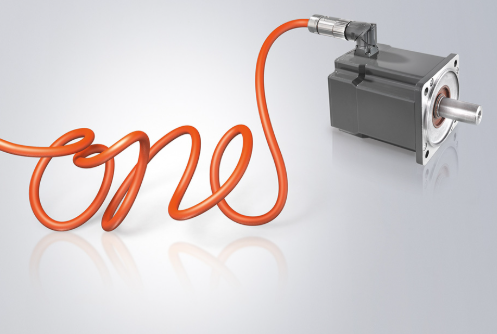
Key characteristics and construction of OCT Hybrid Servo Cables:
-
Multiple conductor types within a common outer jacket:
-
Power conductors: Thick-gauge conductors (typically 0.5–6.0 mm², depending on motor power rating) to deliver the electrical energy required to drive the motor. Conductors are typically made of tinned copper (for corrosion resistance and solderability) with fine stranding (Class 5 or Class 6 per IEC 60228) to enhance flexibility.
-
Signal conductors: Shielded twisted pairs or individually shielded conductors for encoder feedback signals (e.g., EnDat, Hiperface, BiSS, SSI, resolvers, incremental encoders). These conductors carry high-frequency data (up to 16–32 MHz) and require excellent shielding and controlled impedance to maintain signal integrity.
-
Auxiliary conductors: Additional wires for brake control, temperature sensing (thermistor or PT100), or other auxiliary functions.
-
-
Advanced insulation materials:
-
Cross-linked polyethylene (XLPE) or polypropylene (PP) for power conductors — providing high dielectric strength, low capacitance, thermal stability up to 105–125°C, and resistance to aging.
-
Special low-dielectric materials for signal conductors — maintaining consistent impedance (typically 100Ω or 120Ω differential) and low signal attenuation.
-
-
Multi-layer shielding structure:
-
Aluminum/polyester foil (100% coverage) for high-frequency shielding against radiated EMI.
-
Tinned copper braid (80-95% coverage) for low-frequency magnetic field shielding and mechanical protection.
-
Drain wire (tinned copper) for easy termination and grounding of the shield.
This shielding structure ensures compliance with electromagnetic compatibility (EMC) standards, preventing interference from nearby power cables, motors, and other industrial equipment.
-
-
Durable outer jacket:
-
Polyurethane (PUR): The dominant jacket material, offering exceptional abrasion resistance, oil and grease resistance (including industrial coolants and lubricants), flexibility at low temperatures (down to -40°C), and high flex life (over 1 million flex cycles).
-
Alternative jacket materials: PVC (lower cost, less flexible, shorter flex life — used in static applications), TPE (thermoplastic elastomer — for applications requiring halogen-free flame retardancy or medical-grade materials).
-
-
High flex life design:
-
Optimized conductor stranding (lay length and direction) to minimize internal friction and prevent conductor breakage during repeated flexing.
-
Special filler materials (e.g., aramid fibers, polypropylene yarns) to maintain round cable geometry and provide strain relief.
-
Specialized jacket compounds that resist stress cracking, abrasion, and cold flow under repeated bending.
-
Tested and certified for 1 million to over 10 million flex cycles (at specified bend radius, travel length, and acceleration).
-
Key benefits of OCT Hybrid Servo Cables over separate cables:
| Feature | Separate Power + Signal Cables | OCT Hybrid Servo Cable |
|---|---|---|
| Number of cables | 2–4 cables (power, feedback, brake, thermistor) | 1 cable |
| Cable carrier space | Large (requires wider cable carrier) | Compact (narrower cable carrier) |
| Installation time | Longer (multiple pulls, glands, connections) | Shorter (single pull, gland, connector) |
| Material cost | Lower per meter (but multiple cables) | Higher per meter (but single cable) |
| Total system cost | Higher (more cable carriers, connectors, installation labor) | Lower (reduced labor, smaller cable carriers, fewer connectors) |
| EMC performance | Variable (cables can cross-couple if bundled together) | Superior (designed shielding, controlled routing) |
| System reliability | Lower (more connectors, more points of failure) | Higher (fewer connectors, less risk of misconnection) |
| Maintenance | More complex (multiple cables to trace) | Simplified (single cable, easier troubleshooting) |
OCT Hybrid Servo Cables Market Summary
According to a new market research report published by Market Monitor Global, the global OCT Hybrid Servo Cables market is projected to reach USD 0.18 billion (approximately $180 million) by 2032, at a compound annual growth rate (CAGR) of 7.5% during the forecast period. This robust growth is driven by accelerating factory automation, the proliferation of industrial robots (particularly in automotive and electronics industries), the emergence of humanoid robots and other advanced automation platforms, and the ongoing replacement of traditional discrete-wiring approaches with integrated hybrid cabling solutions.
Market Monitor Global's analysis indicates that the global key manufacturers of OCT Hybrid Servo Cables include Igus (Germany), LAPP Group (Germany), lynxeo (Former Nexans Part) (Germany), Phoenix Contact (Germany), Molex (USA), HELUKABEL (Germany), SAB Bröckskes (Germany), Belden (USA), TECNIKABEL (Spain), and Amphenol (TPC Wire & Cable, LUTZE) (USA). In 2025, the global top five players collectively accounted for approximately 48.0% of total revenue, indicating a moderately fragmented market with a strong German/European presence (particularly in the premium segment) and significant American, Spanish, and Asian competitors. European manufacturers maintain a technological edge in high-flex, high-reliability applications, while Asian competitors (particularly Chinese, Taiwanese, and South Korean) are gaining share in cost-sensitive, high-volume segments.
In terms of product type, the PUR (Polyurethane) Sheath segment is currently the largest, holding a 46.1% share. PUR sheaths dominate dynamic applications (cable carriers, robot arms) because they offer exceptional abrasion resistance, oil and grease resistance (including most industrial coolants and lubricants), good flexibility at low temperatures, and high flex life. PVC (Polyvinyl Chloride) Sheath cables (lower cost, less flexible, shorter flex life) are used in static or low-flex applications (control cabinets, fixed wiring). TPE (Thermoplastic Elastomer) and Specialty sheaths (e.g., halogen-free flame retardant, low-temperature flexible, medical-grade) address niche requirements.
Regarding application, Industrial Automation is the largest segment, accounting for 68.8% of the market. This includes:
-
Automotive manufacturing (robot welding lines, powertrain assembly, body-in-white, painting)
-
Electronics assembly (pick-and-place, PCB assembly, testing)
-
CNC machine tools (milling, turning, grinding, laser cutting, waterjet cutting)
-
Packaging machinery (filling, sealing, labeling, palletizing)
-
Logistics and material handling (automated guided vehicles AGVs, conveyor systems, sortation equipment)
-
General factory automation (indexing tables, transfer lines, assembly stations)
The Robotics segment (dedicated robot cables, as opposed to general factory automation) is the fastest-growing sub-segment, driven by industrial robot installations (over 550,000 units globally in 2024) and the emergence of collaborative robots (cobots) and humanoid robots.
Regional dynamics: The Asia-Pacific region is the largest and fastest-growing market, driven by China's dominance in industrial robot installations (over 50% of global annual installations), Japan's strong robotics and CNC machine tool industry, South Korea's high robot density (leading globally), and emerging industrial automation in India, Vietnam, Thailand, and Indonesia. Europe (Germany, Italy, France, Switzerland, Austria, Eastern Europe) remains a strong market due to the region's leadership in machine tool building (German "Mittelstand"), automotive manufacturing, and high adoption of Industry 4.0 standards. North America (US, Mexico, Canada) is a mature market with steady growth, driven by reshoring initiatives (domestic manufacturing revival), electric vehicle (EV) battery plant construction (highly automated), and logistics automation.
OCT Hybrid Servo Cables Market Dynamics
Market Drivers:
-
D1: Accelerating global adoption of industrial automation and Industry 4.0 – The fourth industrial revolution (Industry 4.0) emphasizes smart, connected, flexible manufacturing systems. Key enabling technologies — industrial robotics, CNC machine tools, automated guided vehicles (AGVs), automated storage and retrieval systems (ASRS), collaborative robots (cobots), and humanoid robots — all rely on servo motors and stepper motors. Each servo or stepper axis typically requires an OCT hybrid cable combining power and feedback. As global automation density increases (robots per 10,000 manufacturing workers), hybrid cable demand rises proportionally. According to the International Federation of Robotics (IFR), global industrial robot installations exceeded 550,000 units in 2024, with the installed base growing at 10-15% annually. Each new robot (6-axis articulated) may require 6-10 hybrid cables (one per axis plus end-effector). This direct correlation between robot installations and hybrid cable consumption drives market growth.
-
D2: Manufacturing upgrading in emerging economies (China, India, Southeast Asia) – As global manufacturing shifts toward higher value-added production, emerging economies are investing heavily in automation to compete with established manufacturing powers. Key drivers:
-
China's "Made in China 2025" initiative (now integrated into broader industrial upgrading strategy) specifically targets advanced CNC machine tools, robotics, and automation components — all intensive users of OCT hybrid cables.
-
India's Production Linked Incentive (PLI) schemes for automobiles, electronics, pharmaceuticals, and other sectors are attracting automation investment.
-
Southeast Asia (Vietnam, Thailand, Malaysia, Indonesia) is moving up the manufacturing value chain from simple assembly to more complex production requiring precision automation.
Unlike mature markets (where automation upgrades often replace existing equipment), emerging markets are often building new factories from scratch, enabling deployment of the latest automation technologies (including OCT hybrid cables) without legacy wiring constraints. This "greenfield advantage" favors high-performance, integrated cabling solutions.
-
-
D3: Technological advancement in servo systems (higher power density, higher feedback resolution) – Modern servo drives and motors are becoming more compact, powerful, and precise:
-
Power density: Smaller frame sizes delivering same or higher torque (e.g., 200 W servo motor same size as previous 100 W). This reduces space for cabling, making bulky separate power+signal cables problematic — pushing designers toward compact hybrid cables.
-
Feedback resolution: Absolute encoders with resolutions of 20-24 bits (1-4 million steps per revolution) or more, using high-speed serial protocols (EnDat 3.0, BiSS C, Hiperface DSL). These high-frequency signals (up to 16-32 MHz) require excellent shielding and controlled impedance — easier to achieve in purpose-designed hybrid cables than in separate signal cables bundled with power cables.
-
Higher PWM switching frequencies (up to 16-32 kHz) for lower motor audible noise and higher control bandwidth. Higher switching frequencies generate more high-frequency common-mode noise, which can couple into adjacent signal lines. OCT hybrid cables with optimized shield design (braid + foil) and symmetrical conductor arrangements provide superior EMC performance compared to ad-hoc cable bundling.
-
-
D4: Emphasis on lean manufacturing, reduced installation time, and cable management simplification – Factory builders and system integrators face pressure to reduce installation costs (labor) and machine footprint:
-
Separate power and signal cables require pulling two (or more) cables through cable carriers, separate gland entries at both motor and drive ends, separate labeling and documentation, more cable tray/chain space, and larger bend radii. Installation time is approximately doubled, and cable carrier width may increase by 50-100%.
-
OCT hybrid cables require only one cable pull, one gland per end, one part number, less cable carrier space, and simpler routing. For a large automated production line with hundreds of servo axes, this translates into substantial savings in installation labor (weeks or months), material cost (cable carriers, fittings, glands), and ongoing maintenance (fewer connectors, easier troubleshooting).
Additionally, hybrid cables reduce the risk of misconnection (connecting power from drive A to motor B, signal from drive A to motor B's encoder) — a common commissioning error with separate cables that can damage drives or cause erratic motion.
-
-
D5: Growth of robotics in emerging applications (humanoid, collaborative, mobile) – Beyond traditional industrial robotics (welding, painting, assembly), new robotics categories with hybrid cable requirements are emerging:
-
Humanoid robots (e.g., Tesla Optimus, Boston Dynamics Atlas, Xiaomi CyberOne, Figure 01, numerous startups) — these have 40-60+ degrees of freedom (actuators), each requiring power and feedback. Humanoid robots are typically tethered during development (and sometimes in operation for continuous power/real-time data), requiring highly flexible, ultra-compact hybrid cables with exceptional flex life (>10 million cycles).
-
Collaborative robots (cobots) — designed to operate alongside humans without safety fencing. Cobots have inherent safety requirements (force limiting, speed monitoring) that rely on high-resolution, high-reliability feedback. Hybrid cables for cobots often require additional shielding to prevent EMI that could corrupt safety signals.
-
Autonomous mobile robots (AMRs) for warehouse/logistics — while many are battery-powered (no tether), some tethered variants exist (continuous charging, direct data connection), and the trend toward "charging while operating" (inductive or contact-based) may increase hybrid cable usage for power+data in docking stations.
Though these emerging categories are smaller in volume than traditional industrial automation today, they are growing at much higher rates (20-50% CAGR) and often require premium, application-specific hybrid cables with higher specifications (more flex cycles, smaller bend radius, lighter weight, higher data rates), commanding higher margins.
-
Market Restraints:
-
R1: Higher upfront cost compared to separate cables – An OCT hybrid cable (combining power conductors + shielded twisted pair feedback + overall braid + durable jacket) is more expensive to manufacture than a separate power cable and a separate signal cable, due to: more complex stranding and layering, additional shielding materials (foil and braid), more precise process control (ensuring roundness, concentricity, consistent impedance), and lower production volumes (less standardization). Depending on specifications, a hybrid cable may cost 20-50% more than the sum of an equivalent separate power cable and signal cable (though total system cost — including installation labor, cable carrier, connectors, maintenance — is often lower for hybrid). For cost-sensitive end users (small machine builders, price-competitive OEMs, upgrades of existing machines with spare capacity for multiple cables), the higher hybrid cable material cost may outweigh long-term benefits, particularly if installation labor is inexpensive (low-wage regions) or if the machine already uses separate cables (switching costs).
-
R2: Limited standardization and potential proprietary interfaces – Unlike standard power cables (e.g., IEC 60227, UL 1007) and signal cables (e.g., CAT5e, CAT6), OCT hybrid cables are often custom-designed for specific servo motor/drive brands or specific applications. Examples:
-
Some servo manufacturers (Siemens, Bosch Rexroth, Fanuc, Yaskawa) specify custom hybrid cable constructions to meet their EMC and signal integrity requirements, including specific shield materials, conductor sizes, and twist rates.
-
Encoder feedback protocols (EnDat, Hiperface, BiSS) have different electrical requirements (impedance, capacitance, max length), driving different cable designs.
-
Different industries have different environmental requirements (chemical resistance for food processing, low smoke zero halogen for mass transit, ultra-flex for semiconductor cleanroom robots).
This fragmentation prevents full commoditization, reduces competition (only approved suppliers for each design), increases inventory costs (multiple cable types), and complicates procurement for machine builders. From a user perspective, replacing a damaged hybrid cable may require ordering a specific part number from the original equipment manufacturer (OEM) at premium pricing, rather than sourcing a generic replacement.
-
-
R3: Technical complexity of achieving high flex life and signal integrity simultaneously – Designing an OCT hybrid cable that survives millions of flex cycles while maintaining stable electrical performance (capacitance, impedance, attenuation, shield coverage) is non-trivial:
-
Stranding optimization: Conductor lay length must balance flexibility (shorter lay length increases flexibility but may increase capacitance and reduce flex life due to strand-to-strand abrasion). For fine-strand conductors (e.g., Class 6 or Class 5 according to IEC 60228), inconsistent stranding can cause premature conductor breakage.
-
Shield integrity under flex: Braided copper shields are subject to wear (strands breaking) and opening (reduced coverage) under repeated flexing. Special high-flex braids (with finer strands, optimized braid angle, protective overbraid) are required but increase cost.
-
Cable geometry stability: Roundness must be maintained under flex to ensure consistent electrical spacing between power and signal conductors. Flattening (egg-shaping) changes impedance, increasing reflections and signal degradation.
-
Temperature rise effects: Servo motors can operate at 80-120°C surface temperature; cables attached to motors (or routed near motors) experience elevated temperatures. High temperatures accelerate insulation aging, increase conductor resistance, and reduce flex life. Hybrid cable designs require careful thermal rating (e.g., 90°C, 105°C) and derating for bundled installations.
Suppliers lacking deep expertise in both materials science and signal integrity may produce cables with inadequate flex life (premature failure causing machine downtime) or signal integrity (encoder noise causing position errors, servo oscillations, or emergency stops). This technical barrier limits new entrants and restricts competition.
-
-
R4: Competition from wireless and fiber-optic alternatives – In some applications, wireless communication (industrial WLAN, Bluetooth, proprietary low-latency protocols) or fiber-optic cables (immune to EMI, very high bandwidth) compete with hybrid cables:
-
Wireless encoders (e.g., Sick AHS/AHM, TR-Electronic, Hengstler) eliminate the feedback cable entirely, retaining only power cable. Wireless is attractive for rotating machinery (indexing tables, rotary axes) where cable twisting is problematic, or for retrofits where routing new cables is difficult. However, wireless introduces latency, potential interference, and power supply complexity (battery or inductive power).
-
Fiber-optic feedback (e.g., Sercos III, PROFINET with fiber) offers extremely high bandwidth and EMI immunity but requires separate power cable (no hybrid integration with fiber because fiber does not conduct power). Some fiber-optic systems use composite cables (copper conductors + optical fibers) which can be considered a specialized hybrid variant, but these are less common.
For most industrial automation applications, copper-based hybrid cables remain the cost-effective, proven, and reliable solution. But in niche applications with extreme EMI (e.g., large welding robots, plasma cutters, MRI-adjacent equipment), fiber-optic or wireless alternatives may be preferred, restricting hybrid cable market share in those segments.
-
Market Opportunities:
-
O1: Replacement of traditional separate cables in legacy machine upgrades – The global installed base of CNC machine tools, industrial robots, and automated production lines (millions of axes) largely uses separate power and signal cables. As these machines undergo retrofits, refurbishments, or control system upgrades (e.g., replacing legacy PLCs with modern PC-based controls, adding IoT connectivity, improving energy efficiency), there is an opportunity to replace legacy cabling with modern OCT hybrid cables. Benefits include:
-
Simplified cable management (reduces cable carrier width, freeing space for additional utilities or reducing enclosure size).
-
Improved EMC performance (older machines often have inadequate shielding or degraded grounding).
-
Reduced spare parts inventory (one hybrid cable replaces two separate cables).
However, switching requires compatible drives and motors (or adapters), engineering change orders, requalification, and operator training. Cable manufacturers can partner with system integrators and machine tool refurbishers to offer retrofit kits (pre-assembled hybrid cables with appropriate connectors, labeled length, installation instructions).
-
-
O2: Development of standardized hybrid cable families to reduce fragmentation – Recognizing the pain points of fragmentation, industry groups (e.g., PROFIBUS & PROFINET International, ODVA, EtherCAT Technology Group) and major servo manufacturers are developing standardized OCT hybrid cables for common power+feedback combinations. Examples:
-
Single-cable technology for PROFINET (e.g., Siemens DRIVE-CLiQ, Bosch Rexroth SERCOS III) combining power, feedback, and real-time communication over hybrid cables with standard M23 or M17 connectors.
-
EtherCAT P (Power over EtherCAT) delivering both communication (100 Mbit/s) and power (up to 600 mA) over 4-wire hybrid cable, suitable for distributed I/O and small drives.
-
IO-Link hybrid cables combining 24 V DC power (up to 4 A) and IO-Link communication (COM1/COM2/COM3).
Manufacturers that offer comprehensive standardized hybrid cable families — with clearly documented electrical and mechanical specifications, third-party certifications (UL, CSA, CE), and compatible connector options — can address multiple OEMs' needs with reduced inventory complexity. They may also create online configurators (select power rating, signal type, length, connector variant) to streamline customer ordering.
-
-
O3: Cables for extreme environments (heat, chemicals, cryogenics, vacuum) – Beyond standard factory automation, OCT hybrid cables are needed for specialized applications with demanding environmental requirements:
-
Food and beverage processing: Cables require FDA-approved jacket materials (no heavy metals, phthalates), resistance to frequent washdowns (high-pressure hot water, cleaning chemicals (caustic, acid)), and smooth surfaces to prevent bacterial growth. PUR jackets with specific formulations (e.g., oil-resistant, washdown-rated) are available but less common.
-
Semiconductor manufacturing: High-purity, low-outgassing cables for vacuum environments (vacuum robot arms, load locks, process chambers). Materials must not contaminate wafers; flex life requirements are extreme (millions of cycles in vacuum). This is a high-margin niche but requires specialized design and material qualification (NASA low-outgassing standards, SEMI S2 guidelines).
-
Metal and mining industry: Cables must withstand extreme temperatures (as high as 100-150°C near furnaces or smelters), abrasive dust, and mechanical shock. Armored hybrid cables (with steel wire braid or interlocked armor) provide mechanical protection but reduce flexibility.
-
Cold storage / cryogenic applications: Cables must remain flexible at -40°C to -80°C (TPU/PUR becomes brittle; specialty TPE or silicone jackets may be required).
Each extreme environment represents a niche market with less price competition (small number of qualified suppliers) and higher margins. Manufacturers that develop application-specific product lines, obtain necessary certifications, and provide engineering support can differentiate from general-purpose competitors.
-
-
O4: Lightweight and ultra-flexible hybrid cables for collaborative robots and humanoids – Cobots and humanoid robots have stringent cable requirements: ultra-low weight (to maximize payload), extremely small bend radius (to route through joints), extremely high flex life (>10-20 million cycles), and minimal friction (to allow backdrivability for collaborative safety). Traditional OCT hybrid cables for industrial robots are too heavy and stiff. Opportunities include:
-
Miniaturized conductors: Smaller gauge power conductors (using higher voltage to reduce current for same power) and micro-coaxial feedback lines.
-
High-strength, lightweight materials: Conductor alloys (copper-silver, copper-beryllium) for higher tensile strength at smaller diameters; aramid fiber (Kevlar) or polyester (Dyneema) core for strain relief; thermoplastic elastomer (TPE) or TPU jackets with lower density.
-
Lubricated cable designs: Internal lubricants (e.g., molybdenum disulfide, PTFE powder) reduce friction between moving conductors, increasing flex life.
-
Parallel or flat cable configurations (instead of round) for better fit through flat robot arm links.
This is a small but high-value segment, with premium pricing (5-10× standard cable cost per meter). Suppliers that partner with cobot and humanoid developers during the design phase can become specification-mandated suppliers, locking in recurring revenue for the product lifetime.
-
-
O5: Integration with connectors and pre-assembled cable solutions – End users and system integrators strongly prefer pre-assembled cables with connectors already attached (e.g., M12, M17, M23, M40, 7/8", RJ45, D-Sub, rectangular connectors) over bulk cable and field-attachable connectors. Pre-assembly benefits:
-
Reduces installation errors (incorrect wiring, poor crimping, inadequate shielding termination).
-
Saves labor (no stripping, crimping, soldering, or connector assembly on-site).
-
Improves reliability (factory-crimped and tested terminations have lower failure rates than field-installed).
-
Simplifies inventory (one part number per cable length, not separate bulk cable + connector stock).
Suppliers that invest in automated cable assembly lines, offer custom length (+/- tolerance) service with fast turnaround (days, not weeks), maintain wide connector inventory, and provide 2D/3D CAD models for integration can capture higher-margin, recurring business from customers who value installation convenience and reliability. This model also builds switching costs (customers are locked into the supplier's cable+connector combination).
-
-
O6: Expansion in emerging markets (India, Southeast Asia, Eastern Europe, Mexico) – As global supply chains diversify away from single-country concentration, automation investment in emerging markets is accelerating. For OCT hybrid cable manufacturers, opportunities include:
-
Establishing local stock, distribution, and technical support in high-growth regions to compete with incumbent suppliers who may require longer lead times and have less local presence.
-
Adapting products to local certification requirements (e.g., BIS for India, KCS for Korea, EAC for Eurasian Customs Union, UL for Mexico export-focused manufacturing).
-
Partnering with local system integrators and machine builders who prefer sourcing from responsive local suppliers with local-language documentation and after-sales support.
-
Offering entry-level, cost-optimized OCT hybrid cables for price-sensitive emerging market customers, possibly with reduced flex life or lower temperature rating (but still safe and functional).
While profit margins in emerging markets may be lower than in premium segments (Europe, Japan, North America), volume potential is significant, and early movers can establish brand recognition and customer relationships that persist as these markets upgrade to higher-performance products over time.
-


