 +1-3236076188
 sales@marketmonitorglobal.com
 Log In
  Log In
 Home>News>Hydraulic Cylinders for Small & Medium-sized Excavators Market to Reach $2.53 Billion by 2030, Growing at 2.1% CAGR
Hydraulic Cylinders for Small & Medium-sized Excavators Market to Reach $2.53 Billion by 2030, Growing at 2.1% CAGR
Monday,08 Jun,2026
Hydraulic Cylinders for Small & Medium-sized Excavators: Product Introduction
Hydraulic cylinders are used for creating mechanical force in a linear motion. A hydraulic cylinder is a tube capped at either end with a rod sticking out of one side. Attached to the rod, interior to the cylinder, is a piston. The piston separates the internal rod side from the internal cap side of the cylinder. Fluid is forced into either side of the cylinder to extend or retract the piston rod — generating the pushing, pulling, lifting, or tilting forces that power the boom, arm, and bucket movements of an excavator.
This report focuses specifically on hydraulic cylinders used for small and medium-sized excavators, categorized by operating weight as follows:
-
Small-sized excavator: 1,000 kg – 10,000 kg (typically used in urban construction, landscaping, utility work, and residential projects where maneuverability and reduced ground pressure are critical)
-
Medium-sized excavator (Category 1): 10,000 kg – 25,000 kg (the workhorse of general construction, road building, and site development)
-
Medium-sized excavator (Category 2): 25,000 kg – 50,000 kg (used in larger infrastructure projects, mining support, mass excavation, and heavy civil engineering)
Each excavator size class requires cylinders with specific bore diameters, stroke lengths, operating pressures (typically 250–350 bar), and mounting configurations. The cylinder set on a typical excavator includes: bucket cylinder (smallest, highest cycle rate), arm/ stick cylinder (intermediate), and boom cylinder (largest, highest load capacity). A standard 10-ton excavator may contain 6–8 individual hydraulic cylinders across its working attachments and slew control system.
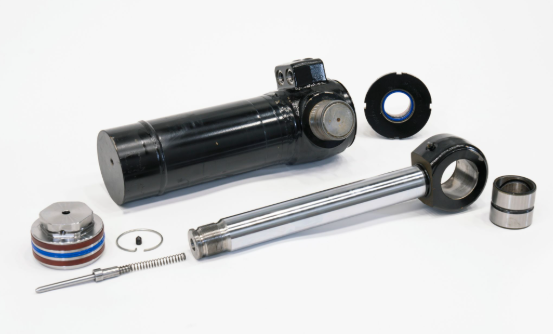
Hydraulic Cylinders for Small & Medium-sized Excavators Market Summary
According to a new market research report published by Market Monitor Global, the global Hydraulic Cylinders for Small & Medium-sized Excavators market is projected to reach USD 2.53 billion by 2030, growing at a compound annual growth rate (CAGR) of 2.1% during the forecast period. This relatively modest growth rate reflects the mature, replacement-driven nature of the market, balanced against steady demand from global construction activity and the ongoing mechanization of emerging economies.
Market Monitor Global's analysis indicates that the global key manufacturers of Hydraulic Cylinders for Small & Medium-sized Excavators include KYB (Japan), Hengli Hydraulic (China), Komatsu (Japan), DY Corporation (South Korea), Caterpillar (USA), Doosan (South Korea), Liebherr (Germany), Sany Zhongxing (China), Wipro Infrastructure Engineering (India), and John Deere (USA). In 2023, the global top five players accounted for approximately 49.0% of total revenue, indicating a moderately fragmented market with a mix of integrated OEM captives (Komatsu, Caterpillar, Doosan, Liebherr, John Deere) and specialized independent hydraulic suppliers (KYB, Hengli, DY, Wipro). China's Hengli Hydraulic has gained significant share in recent years, benefiting from domestic excavator production volumes exceeding 300,000 units annually.
In terms of product type, the Cylinder Diameter Between 120mm and 180mm segment is currently the largest, holding a 74.8% share. This bore diameter range corresponds directly to the most common excavator weight classes: smaller bores (120–140mm) typically serve 6–12 ton machines, while larger bores (150–180mm) are used in 15–30 ton excavators. Cylinders below 120mm (serving mini-excavators under 6 tons) and above 180mm (serving large excavators over 30 tons) represent smaller niches. The dominance of the 120–180mm category reflects the fact that small and medium excavators — the focus of this report — constitute the vast majority of global excavator production volume, with China alone accounting for over 200,000 units annually in the 6–15 ton range.
Regarding application, the 1-10 Ton Excavator segment is the largest, accounting for 54.3% of the market. This includes both true small excavators (6–10 tons) and the upper end of the mini-excavator range (1–6 tons). The dominance of this segment is driven by several factors: first, the proliferation of compact excavators in developed markets (Europe, North America, Japan) for landscaping, utilities, and demolition; second, the massive volume of small excavator production in China for domestic infrastructure and export markets; and third, the relatively higher cylinder replacement rate on smaller machines, which often operate in more abrasive urban environments and experience higher cycle counts per hour compared to larger machines working in looser materials.
Market Drivers:
-
D1: Global infrastructure development, particularly in emerging economies – With the global push for infrastructure modernization — especially in China's ongoing urbanization and belt-and-road initiatives, India's National Infrastructure Pipeline (targeting $1.4 trillion in spending by 2025), Southeast Asia's rapid urban expansion, and Africa's resource corridor developments — the demand for construction equipment, including excavators, continues to rise. Each new excavator shipped requires a full set of hydraulic cylinders (typically 3–4 working cylinders plus swing and travel motors with integrated cylinder functions). This directly and immediately impacts the market for hydraulic cylinders.
-
D2: Replacement demand from the installed base – Unlike the original equipment (OE) market, which fluctuates with new machine sales, the aftermarket for replacement cylinders and seal kits is substantially larger and more predictable. The global installed base of small and medium excavators is estimated at over 5 million units, with an average hydraulic cylinder service life of 3,000–8,000 operating hours depending on operating conditions (harsh environments reduce lifespan). Given that excavators typically accumulate 800–1,500 operating hours per year in commercial service, a typical machine will require one or more cylinder rebuilds or replacements over its 8–12 year lifespan. This replacement cycle creates a steady, recession-resistant revenue stream for cylinder manufacturers and rebuilders.
-
D3: Increasing hydraulic operating pressures for greater power density – Modern excavator designs are pushing hydraulic system pressures from traditional 300–320 bar toward 350–380 bar, and in some specialized cases 400 bar, to deliver higher breakout forces and lifting capacities without increasing cylinder bore size (which would add weight and reduce maneuverability). This trend toward higher pressures requires cylinders with improved rod seals, piston seals, wear rings, and tube materials. Pressure upgrades often trigger full cylinder replacements rather than simple repacking, creating incremental demand even when the underlying machine population remains stable.
-
D4: Shift toward electric-over-hydraulic and telematics-enabled cylinders – While the fundamental hydraulic cylinder remains a passive mechanical component, smart excavators increasingly incorporate cylinder-mounted sensors: position sensors (magnetostrictive or Hall-effect) for precise boom/arm control, pressure sensors for load-sensing hydraulics, and temperature sensors for thermal management. Some advanced excavators use proportional valve-controlled cylinders with closed-loop feedback for semi-autonomous grading or digging functions. Cylinder manufacturers who integrate these sensing and communication capabilities (using IO-Link or CANbus interfaces) can command premium pricing and build stickier customer relationships.
Market Restraints:
-
R1: Cyclical exposure to construction and mining investment – The hydraulic cylinder market is highly sensitive to economic cycles. During downturns — such as the 2008 financial crisis, the 2015–2016 commodity price collapse, or the 2020 COVID-19 pandemic — infrastructure projects are delayed or cancelled, new equipment sales decline sharply, and rental fleet operators defer maintenance. In severe downturns, the market for new hydraulic cylinders can contract by 30–50% within 12 months, putting pressure on suppliers with high fixed costs. Even the aftermarket segment, while more resilient, experiences margin compression as customers switch to lower-cost rebuilds or used cylinders.
-
R2: Increasing complexity of cylinder design and manufacturing – The demands of higher operating pressures, longer service intervals (targeting 5,000–8,000 hours between rebuilds), lighter weight (to meet emissions-driven weight reduction targets), and sensor integration have significantly increased engineering and manufacturing complexity. Small and medium cylinder manufacturers without substantial R&D budgets struggle to keep pace with design-for-manufacturing advances such as friction-welded piston rods, cold-drawn seamless tube precision honing, robotic welding for end caps, and automated assembly line qualification testing. This complexity drives consolidation, as larger players acquire smaller competitors for their customer relationships rather than their technology.
-
R3: Raw material price volatility – Hydraulic cylinders are material-intensive, with steel tube, chrome-plated steel rod, cast iron (or sintered metal) pistons, and various seal materials accounting for 50–70% of finished cylinder cost. Fluctuations in global steel prices — driven by Chinese production cuts, trade tariffs (e.g., US Section 232), energy costs, and shipping disruptions — directly impact cylinder manufacturers' margins. Unlike large OEMs who can hedge raw material purchases or negotiate long-term contracts, smaller cylinder rebuilders and independent manufacturers are often price-takers, absorbing margin compression when material prices spike.
-
R4: Competition from low-cost rebuilders and local workshops – In many markets, particularly in Asia, Africa, and Latin America, a substantial portion of hydraulic cylinder repair and replacement is handled by small, unbranded local workshops. These competitors operate with minimal overhead, used or locally manufactured seals, and significantly lower labor costs. While their quality and reliability may be inconsistent, they serve price-sensitive customers (farmers, small contractors, owner-operators) who prioritize immediate cost savings over long-term durability. This informal sector limits the addressable market for branded, certified cylinder suppliers, particularly for older machines outside of warranty.
Market Opportunities:
-
O1: Growth in compact and electric excavator segments – Urban construction, indoor demolition, and greenhouse/agricultural applications are driving demand for even smaller excavators (0.5–4 tons) as well as battery-electric compact excavators (emerging products from Volvo CE, Bobcat, Komatsu, and Sany). These machines require specialized cylinders: shorter strokes, reduced operating pressures (to conserve battery energy), lighter weight (to maximize payload), and often corrosion-resistant materials for food-processing or pharmaceutical applications. Cylinder manufacturers who develop purpose-built product lines for these growing niches — including cylinders optimized for electro-hydraulic systems with regenerative circuits — can capture early-mover advantages in a segment expected to grow at 8–12% CAGR over the next decade.
-
O2: Expanding aftermarket presence through digital platforms – The traditional hydraulic cylinder aftermarket has been highly fragmented, with customers relying on local distributors, machine dealers, or workshop rebuilds. Digital platforms — such as OEM parts portals, e-commerce marketplaces (e.g., Alibaba Industrial, Amazon Business), and specialized heavy equipment parts websites — offer cylinder manufacturers direct access to end customers, bypassing multiple layers of distribution. Manufacturers who invest in comprehensive digital catalogs (searchable by OEM part number, excavator model, cylinder dimensions), technical installation videos, and competitive cross-border shipping can capture a growing share of the cross-border aftermarket, particularly for regions with limited local manufacturing.
-
O3: Cylinder remanufacturing and circular economy programs – As environmental regulations tighten (particularly in the EU, with its proposed circular economy action plan for construction equipment), OEMs and large contractors are under pressure to reduce waste and embodied carbon. Hydraulic cylinders are ideal candidates for remanufacturing: the heavy-walled tube and chrome-plated rod typically outlast the seal and piston components by several lifecycles. Major OEMs including Caterpillar, Komatsu, and Sany are expanding their certified remanufacturing programs, accepting used cylinders in exchange for rebuilt units at lower cost. Independent cylinder manufacturers who establish ISO-certified remanufacturing lines can partner with OEMs, rental houses, or large fleet operators to capture this growing "green" aftermarket segment, which often generates higher margins than new cylinder production due to lower material costs.
-
O4: Localization of production in high-growth markets – While China remains the world's largest excavator market (approximately 40% of global units), other high-growth markets — India, Indonesia, Brazil, Mexico, Turkey, and various African nations — are implementing local content requirements to encourage domestic industrial development. Cylinder manufacturers who establish local assembly or manufacturing in these markets can avoid import tariffs (which can range from 10–35%), reduce freight costs for large, heavy cylinders, and win contracts with local OEMs and government infrastructure projects that require domestic supply. India, in particular, is experiencing rapid excavator assembly growth (Hyundai, JCB, Caterpillar, Sany all have local facilities), creating a need for localized cylinder suppliers.
-
O5: Sealless and magnetorheological cylinder technologies – While still emerging, advanced cylinder technologies could disrupt the traditional hydraulic cylinder market. Sealless cylinders (using fluid film bearings or magnetic levitation) promise near-zero friction, no seal wear, and reduced contamination sensitivity — though they remain experimental for excavator applications. More near-term is the potential for magnetorheological (MR) cylinders, where a magnetic field controls fluid viscosity, enabling active damping and variable stiffness for bucket and arm cylinders. This could reduce operator fatigue and improve precision in grading or demolition applications. Cylinder manufacturers with advanced R&D capabilities who pursue these technologies could secure long-term differentiation and premium pricing once production costs decline sufficiently for commercial deployment in construction equipment.
Why Choose Us?

Innovative solutions
Deliver practical and innovative solutions for complex business challenges.

Comprehensive data analysis
Conduct comprehensive data analysis to dig out valuable business insights.

Rich research experience
Possess rich research experience across multiple industry verticals.

Sharp market insight
Maintain sharp market insight to capture emerging industry trends timely.
Call:
+1-3236076188 Know More About Us >>

